

Precision Machining Services for Finished Industrial Components
Great Lakes Industrial Solutions Inc. provides precision machining services that transform cast components into finished, ready‑to‑install parts. Our capabilities include turning, drilling, and milling operations that deliver tight tolerances, consistent surface quality, and production‑ready results across a wide range of industrial applications.
Turning
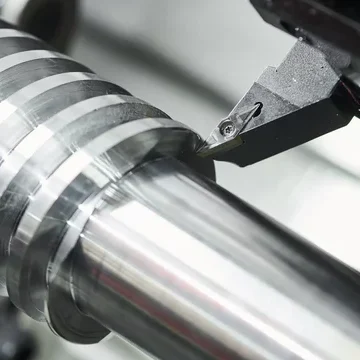
Turning or lathing rotates the workpiece onto a machine, while a single-edge tool is stationary. In this process, the cutting tool is operated slowly parallel to the rotating axis of the workpiece to remove the material as it passes.
Drilling
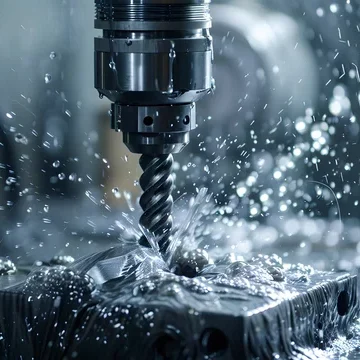
Drilling creates a circular hole by spinning a cylindrical tool parallel to the workpiece’s axis of rotation. The hole is the same in diameter as the tool used.
Milling
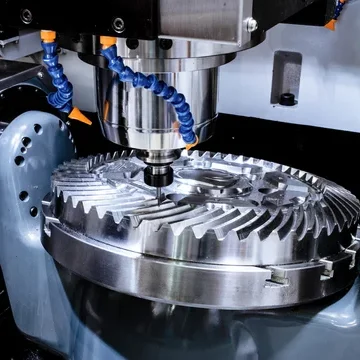
Milling removes material with the help of rotary cutters from a workpiece in a movement perpendicular to the rotational axis of the cutting tool
How does Machining Work?
Machining is typically performed using CNC equipment, or Computer Numerical Control machines. CNC machining uses computer software to convert CAD designs into precise tool paths, allowing raw material to be accurately shaped into three-dimensional components with tight tolerances.
Unlike rapid prototyping, CNC machining produces parts from materials that match the final product’s density, surface finish, and structural integrity. As a result, machined components are well suited for functional testing, moving assemblies where friction matters, and sealed parts that require precision O-ring and gasket surfaces.